Kellogg Innovation Network: Driving Global Collaboration and Leadership in Innovation

Introduction
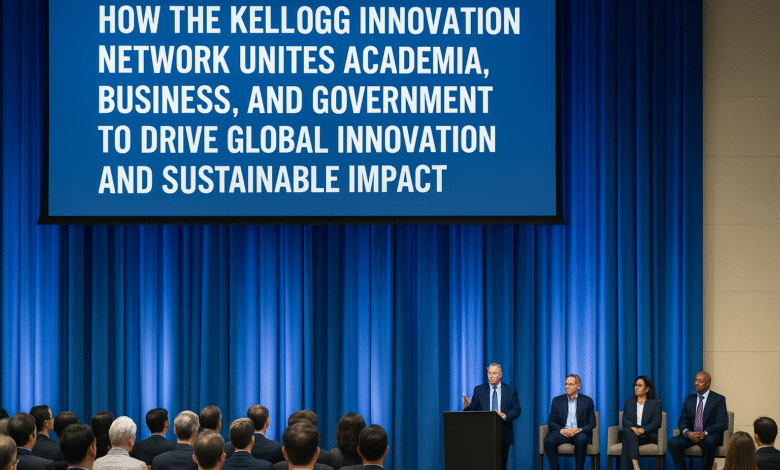
In a rapidly evolving world where disruption defines success, collaboration and innovation have become essential. The Kellogg Innovation Network (KIN) is a pioneering global initiative that bridges academia, business, and policy to create meaningful solutions for global challenges. Established in 2003 by Professor Robert C. Wolcott of Northwestern University’s Kellogg School of Management, the Kellogg Innovation Network has built a reputation as a catalyst for leadership, creativity, and transformative action across industries.
Over two decades, this dynamic platform has grown into a hub where ideas are exchanged, partnerships are forged, and innovation is nurtured. Through its global summits, catalyst forums, and international collaborations, the Kellogg Innovation Network continues to empower leaders to translate visionary ideas into practical impact.
Origins of the Kellogg Innovation Network
The Kellogg Innovation Network was conceived at a time when globalization, technology, and digital disruption were reshaping the world economy. Professor Robert C. Wolcott recognized that complex challenges such as climate change, inequality, and technological transformation required cross-sector collaboration. Founded in 2003, KIN became an invitation-only forum designed to connect senior leaders from diverse fields — including business, academia, government, and non-profit organizations — to co-create sustainable solutions.
Unlike traditional academic or corporate events, the Kellogg Innovation Network emphasized real-world collaboration. It blended academic rigor with business strategy and policy insight, positioning itself as a neutral yet influential ground for dialogue and innovation.
Mission and Vision of KIN
At the heart of the Kellogg Innovation Network lies a powerful mission — to empower leaders to innovate collectively for global progress. Its vision is to create an inclusive and sustainable world where innovation benefits society as a whole.
Core objectives include:
-
Encouraging Cross-Sector Dialogue: Connecting business leaders, policymakers, scholars, and social innovators to exchange knowledge.
-
Accelerating Actionable Innovation: Turning strategic discussions into projects with measurable outcomes.
-
Building Sustainable Impact: Promoting innovation that supports long-term environmental, economic, and social stability.
The Kellogg Innovation Network thus serves as both a think tank and an action-oriented community that drives innovation for the greater good.
The KIN Global Summit
One of the most significant initiatives of the Kellogg Innovation Network is the KIN Global Summit. Launched in the mid-2000s, this annual event attracts global leaders, executives, entrepreneurs, and academics who are committed to solving pressing global issues.
Key highlights of the summit include:
-
Global Representation: Participants come from multiple continents, ensuring a wide range of perspectives.
-
Actionable Outcomes: Rather than focusing on abstract discussions, sessions are designed to produce concrete strategies.
-
Resource Support: Innovative ideas presented at the summit often gain mentorship, funding, and implementation assistance.
-
Renowned Speakers: The summit has hosted world-class thinkers, policymakers, and industry leaders who inspire change.
The KIN Global Summit is more than an event—it’s a catalyst for innovation. It encourages attendees to return to their fields with renewed purpose, actionable strategies, and new collaborations.
KIN Catalyst Forums and Expeditions
To deepen engagement beyond the annual summit, the Kellogg Innovation Network organizes Catalyst Forums and KIN Expeditions.
-
Catalyst Forums: These are theme-focused gatherings centered on areas such as digital transformation, healthcare innovation, sustainability, and inclusive growth. They provide participants the space to delve deeply into specific issues and design practical solutions.
-
KIN Expeditions: These immersive experiences bring leaders directly into innovation ecosystems across the globe—such as Tel Aviv’s tech hubs or emerging markets in Asia and Africa. The goal is to learn from local innovation cultures, foster collaboration, and build global partnerships that drive change.
Through these initiatives, the Kellogg Innovation Network extends its reach far beyond academic boundaries, empowering participants with insights and real-world exposure.
Bridging Academia, Industry, and Policy
A hallmark of the Kellogg Innovation Network is its unique ability to integrate the perspectives of academia, business, and public policy. Academic research provides the foundation of knowledge and evidence-based frameworks, while corporate leaders bring practical insights from the field. Policymakers and non-profit leaders add social, ethical, and governance perspectives.
By merging these viewpoints, KIN fosters holistic problem-solving. The network ensures that research informs practice, corporate innovation aligns with societal goals, and policy supports sustainable development. This synergy creates solutions that are both economically viable and socially responsible.
Impact and Achievements
Since its founding, the Kellogg Innovation Network has influenced countless organizations and initiatives worldwide. Its collaborative environment has sparked new ventures, corporate sustainability programs, and cross-border partnerships.
Notable areas of impact include:
-
Sustainability: KIN dialogues have influenced global sustainability agendas and corporate green strategies.
-
Healthcare Innovation: KIN has supported collaborations between tech companies and health organizations to improve accessibility.
-
Entrepreneurship: By connecting startups with established firms and investors, KIN has strengthened entrepreneurial ecosystems.
-
Global Collaboration: Its forums and expeditions have fostered lasting partnerships across continents.
While many outcomes remain confidential, the network’s influence continues to ripple through multiple sectors, shaping the way innovation is pursued worldwide.
From KIN to TWIN: The Evolution
As its influence expanded, the Kellogg Innovation Network evolved into the World Innovation Network (TWIN). This transformation represents the global scalability of KIN’s original vision. While maintaining its roots at the Kellogg School of Management, TWIN operates as a broader, independent network that connects innovators from around the world.
The evolution from KIN to TWIN underscores the growing importance of global collaboration in tackling 21st-century issues such as digital transformation, inequality, and environmental change. The spirit of KIN lives on through TWIN’s continued commitment to inclusive and actionable innovation.
Why the Kellogg Innovation Network Matters Today
In an era defined by artificial intelligence, automation, and geopolitical uncertainty, the Kellogg Innovation Network remains more relevant than ever. Global challenges such as pandemics, climate crises, and social inequality require collaborative responses that no single institution can provide alone.
KIN exemplifies the power of connection — showing how diverse minds can come together to transform disruption into opportunity. Its work continues to inspire new generations of innovators and leaders to build a sustainable and equitable global future.
Key Lessons from the Kellogg Innovation Network
-
Collaboration is Essential: Complex problems demand multi-sector cooperation.
-
Diversity Fuels Innovation: Innovation thrives when diverse perspectives converge.
-
Ideas Must Become Action: Real progress comes from implementation, not just discussion.
-
Networks Create Resilience: Strong relationships prepare organizations for future uncertainty.
These principles have made the Kellogg Innovation Network a global model for inclusive and impactful innovation.
The Future of Innovation Networks
Looking ahead, the Kellogg Innovation Network and its successor TWIN are poised to play even greater roles in shaping the future. By expanding digital collaboration platforms, engaging youth leaders, and focusing on equity-driven innovation, KIN’s mission continues to evolve with global needs.
The path forward emphasizes accessibility, sustainability, and inclusiveness—ensuring innovation benefits all of humanity, not just a privileged few.
Conclusion
The Kellogg Innovation Network stands as a testament to the power of collective intelligence. By uniting academia, business, government, and civil society, it has redefined how innovation and leadership intersect. Its global summits, catalyst forums, and expeditions have transformed ideas into measurable change. Through its evolution into the World Innovation Network, KIN’s legacy continues to inspire collaboration, leadership, and a shared vision for a better world.
FAQs
Q1: What is the Kellogg Innovation Network?
The Kellogg Innovation Network (KIN) is a global platform founded by Northwestern University’s Kellogg School of Management to connect leaders from various sectors and drive collaborative innovation.
Q2: Who founded the Kellogg Innovation Network?
It was founded in 2003 by Professor Robert C. Wolcott, an expert in innovation and entrepreneurship.
Q3: What is the main goal of KIN?
The network aims to bridge academia, business, and government to co-create solutions for global challenges.
Q4: What are KIN Catalyst Forums?
These are specialized sessions that bring together experts around focused themes such as healthcare, sustainability, and digital transformation.
Q5: How has KIN evolved over time?
The Kellogg Innovation Network has grown into the World Innovation Network (TWIN), expanding its global reach and impact while maintaining its core mission of collaborative innovation.